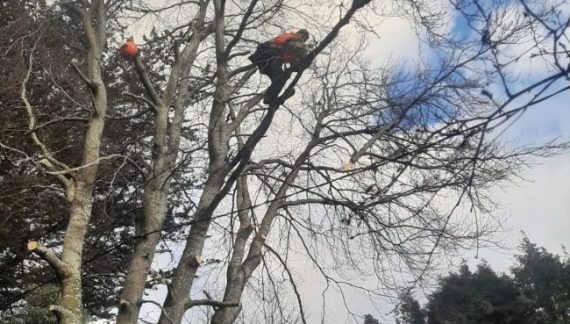
Trees and hedges are essential components of Dublin's green canopy, offering shelter for wildlife, privacy from neighbours, and natural absorption of rainwater. However, when branches encroach upon buildings, block light, or pose safety hazards, property owners often wonder what legal rules apply.
In Ireland, tree management is regulated by statutory wildlife legislation, local council planning conditions, and common law boundary principles. Here is what every homeowner needs to know before cutting or felling trees in Dublin.
1. Section 40 of the Wildlife Act & Nesting Season
Under Section 40 of the Wildlife Act 1976 (as amended by the Wildlife (Amendment) Act 2000), it is an offence to cut, grub, burn, or destroy vegetation growing on any land not then cultivated between 1st March and 31st August.
Does this apply to domestic gardens?
The primary purpose of Section 40 is to protect wild birds during their breeding and nesting season in hedgerows, woodlands, and upland areas. While ordinary domestic gardens are considered "cultivated land", it remains a criminal offence under Irish law to intentionally disturb, damage, or destroy the active nest or eggs of any wild bird. Professional tree surgeons always conduct an arborist pre-climb inspection for active nests before initiating work during these months.
2. Overhanging Branches & Boundary Rights
One of the most common questions our Dublin arborists receive involves overhanging branches from neighbouring gardens.
- The Right to Cut: Under common law, you are entitled to prune branches that cross the boundary line into your property airspace. You do not require your neighbour's permission to cut what overhangs your boundary.
- No Trespassing: You cannot step onto your neighbour's property or lean over excessively to cut branches on their side without permission.
- Ownership of the Arisings: The timber, foliage, and fruit from the tree legally belong to the owner of the tree. You should politely offer the cut branches back to your neighbour. If they refuse, you are responsible for responsible disposal.
3. Tree Preservation Orders (TPOs) in Dublin
Local councils across Dublin (Dublin City Council, Dún Laoghaire-Rathdown, Fingal, and South Dublin County Council) have the authority to place Tree Preservation Orders on trees of significant historic, aesthetic, or ecological value.
If a tree on your property is protected by a TPO, it is an offence to prune, lop, top, or fell it without formal written consent from your local planning authority. At Newline Landscaping, we verify council planning maps and can assist in preparing professional arborist hazard reports where safety works are genuinely required.
4. Why You Should Never Hire Uninsured "Tree Cutters"
Tree surgery is one of the highest-risk occupations in the construction sector. If an uninsured individual working on your tree falls, drops a heavy limb onto an adjacent roof, or damages power cables, you as the property owner can face devastating personal liability claims.
Newline Landscaping Dublin holds €6.5 million in comprehensive Public and Employers Liability Insurance. All tree surgery is conducted by qualified arborists utilising certified ropes, climbing harnesses, and lowering gear.
Need a Professional Tree Inspection in Dublin?
Contact Newline Landscaping today for a free on-site tree health and safety evaluation across South and North Dublin.
Request Free Site Survey